Teams can improve while strategy remains stuck in funding decisions, approval queues, and missing feedback. Applied End-to-End Flow helps you locate those constraints and act where they can be changed.
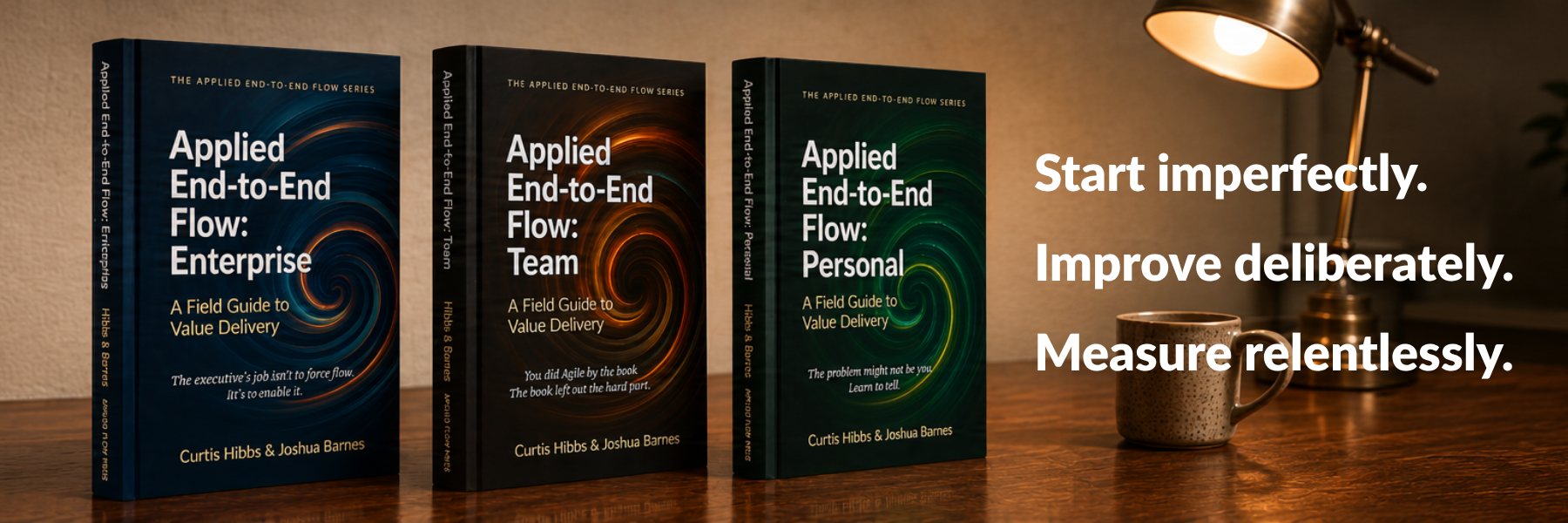
A framework, a knowledge base, and a book series for executives, delivery leaders, and individual professionals who are tired of methodology-heavy, application-light agile literature. Diagnostic. Actionable. Built on decades of combined field experience.
The market is saturated with methodology but starving for applicability.
Applied End-to-End Flow connects a diagnosis to a practical response: identify the constraint, establish who can change it, and define the next improvement to test.
The Value Acceleration Process organizes improvement as bounded work and experiments, each with an owner, evidence, and a review decision. This lets the organization learn before expanding a change.
Pillar 3
Context-First
The framework adapts to your context. Not the reverse.
Start with the organization as it operates: its demand, constraints, decision rights, and existing commitments. Select and adapt the improvement to those conditions.
The Three Barriers
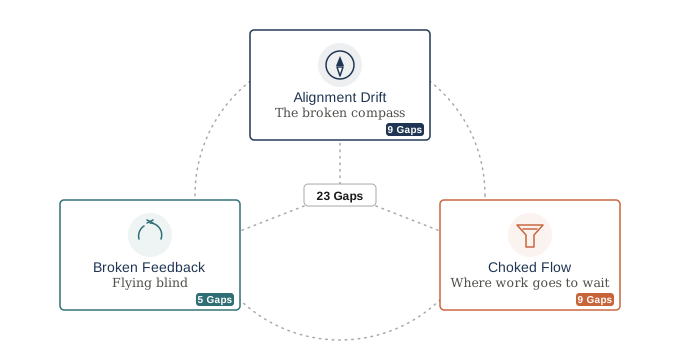
The Three Barriers organize structural problems that can prevent strategy from becoming delivered value. They help leaders look beyond individual effort to the conditions shaping the work.
Alignment Drift. Strategy enters the organization clear and exits as noise. Executives and teams use the same words and mean different things by them.
Choked Flow. Work enters the system faster than approvals release it. Teams stay fully utilized while value stays stuck.
Broken Feedback. Signals from the work travel up filtered. Decisions travel back down based on a sanitized picture of reality.
Each barrier breaks down into specific structural gaps a leadership team can diagnose and address. Read the full Three Barriers entry for the diagnostic and gap inventory.
The Value Acceleration Process
The Three Barriers diagnose the problem. The Value Acceleration Process is how you act on the diagnosis. Define a measurable outcome before you gather. Use visual discovery to surface the obstacles and enabling opportunities around it, and leave with a backlog, an owner, and review dates. After that, the owner orders the backlog, delegates and oversees the next item, and brings its evidence to the scheduled review.
Start with work you have authority to change, and use evidence to seek a decision on constraints controlled elsewhere. Read the full VAP entry in the knowledge base.
You cannot train agility into existence. You cannot certify it. You have to architect the conditions that enable it.
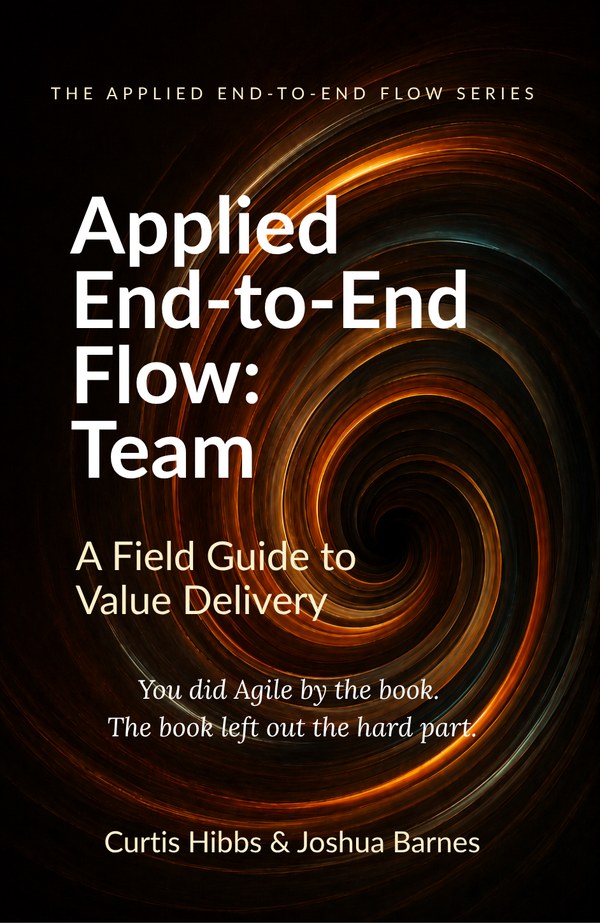
The series applies the framework to senior leaders, delivery teams, and individual professionals. Compare the books to choose the one that fits your work.
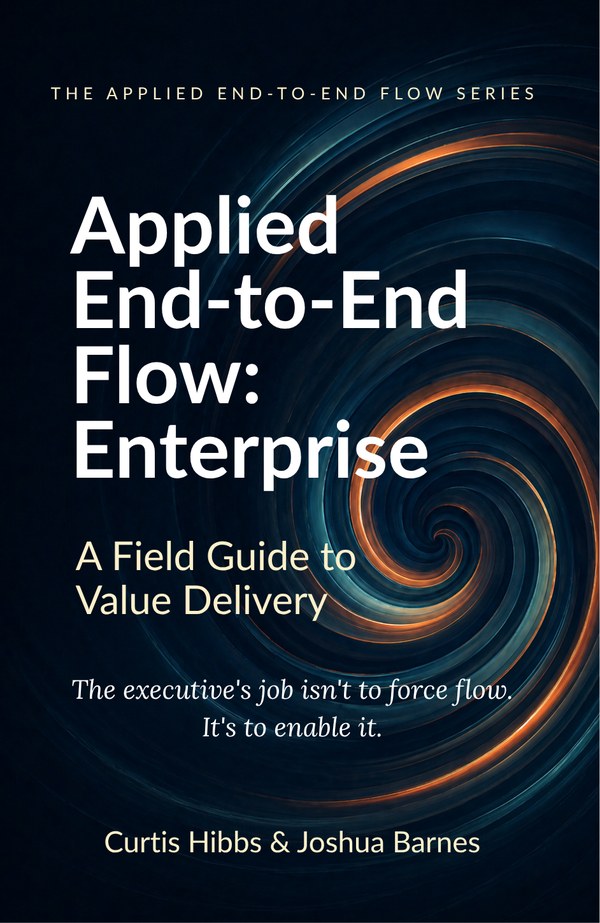
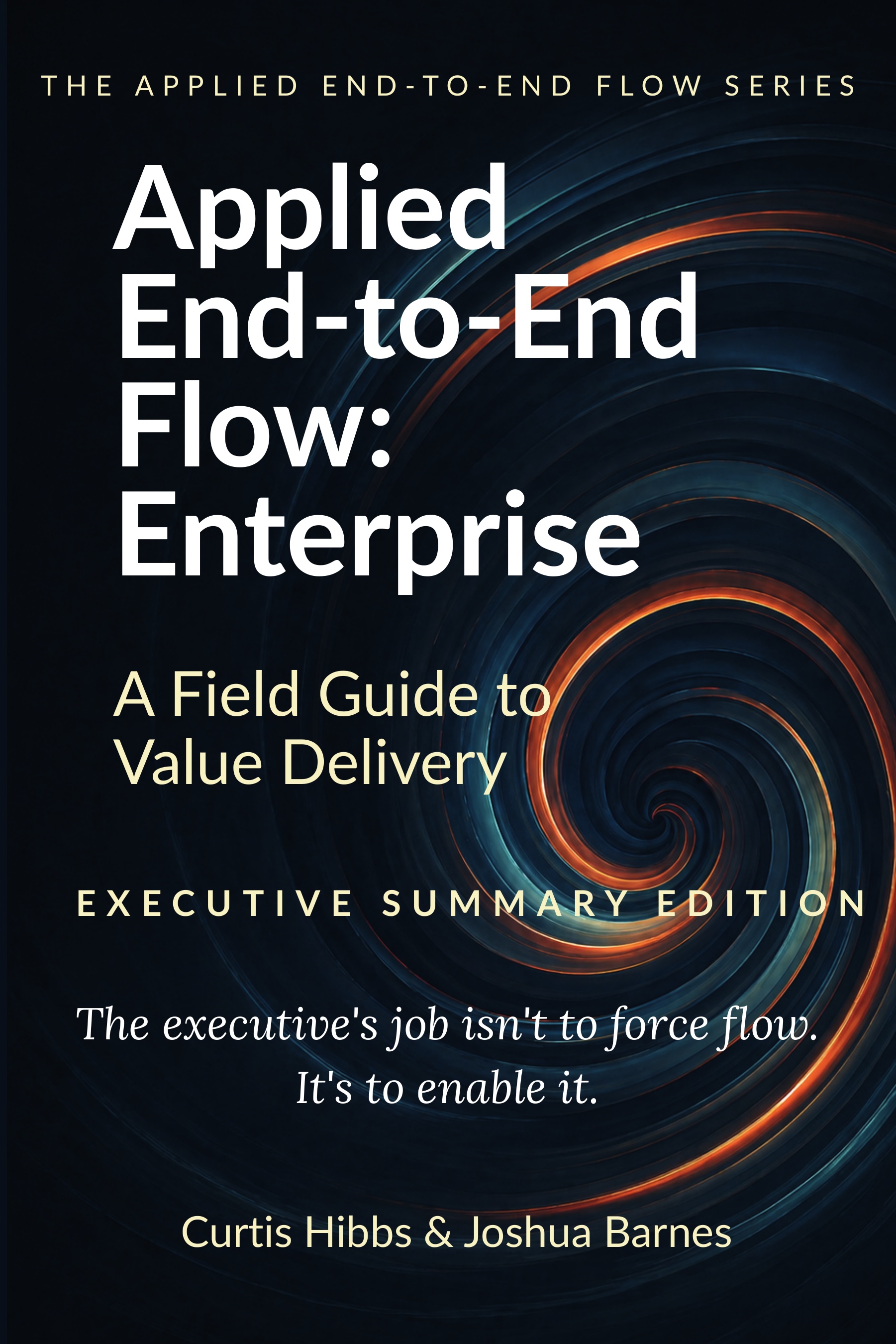
Applied End-to-End Flow: Enterprise Live
A Field Guide to Value Delivery
The executive's job isn't to force flow. It's to enable it.
The Enterprise volume shifts the leader's role from sponsor to System Architect. It carries the Three Barriers diagnostic and the Value Acceleration Process at executive altitude, plus 23 named gaps that can block strategy execution.
Connect the problem you observe to a bounded first move and the authority needed to make it.
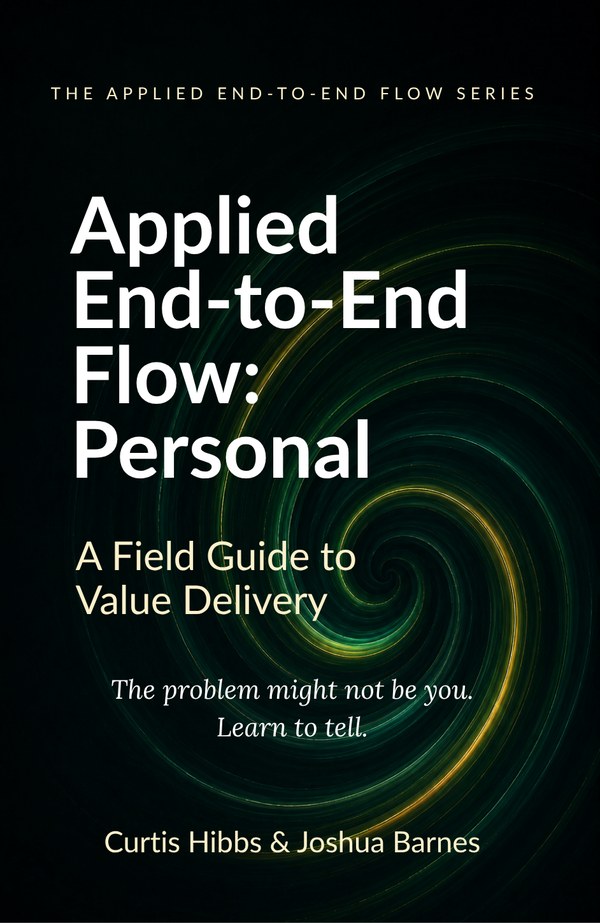
For individual professionals. Diagnose work problems.
The problem might not be you. Learn to tell. The framework at the individual altitude, where systemic overload gets misdiagnosed as personal discipline failure.
Effective Enterprise AI explores how people and AI can deliver better outcomes together. Its developing knowledge base and articles focus on practical workflow design, clear boundaries, and evidence of value delivered. The guiding theme is Durable design for value delivery.
Contact
Email Applied Flow Press at [email protected] for consulting, speaking, bulk book orders, press inquiries, or general questions. For author-specific contact, reach Curtis or Joshua on LinkedIn. See every option on the contact page. Want the free Executive Summary PDF? Get it here.