Diagnostic Frame
The VSM Adoption Continuum
Telling a traditional enterprise to "achieve flow" names a destination without giving it a map. The VSM Adoption Continuum is the map: seven waypoints between project-based delivery and full Enterprise Flow, with a way to locate where you are, see what changes at the next waypoint, and decide whether the transition is worth the investment.
A diagnostic, not a maturity ladder
The VSM Adoption Continuum is a progression of seven waypoints describing how an organization’s value delivery operates, from VSM-0, Traditional project-based delivery, through VSM-6, full Enterprise Flow. Each waypoint describes a set of capabilities that builds on the previous one. The continuum is a diagnostic tool, not a certification ladder: there is no pass or fail, and position carries no status. It exists to locate where you are, show what changes at the next waypoint, and make the cost and prerequisites of each transition explicit.
Use the continuum in four moves
The whole method fits in four moves. The rest of this page gives you what each move needs:
- Read your position from operating behavior, not aspiration.
- Name the binding constraint: the condition that most limits how fast you deliver, learn, and respond.
- Target the waypoint that addresses that constraint. It is not always the next one.
- Check the authority the transition requires before committing to it.
The seven waypoints
One orientation point before the list. The first two advances change how approved work gets delivered; that is the tactical side of End-to-End Flow. From VSM-3 upward, the continuum changes what gets funded and how; that is the strategic side. The two sides are explained in full after the list.

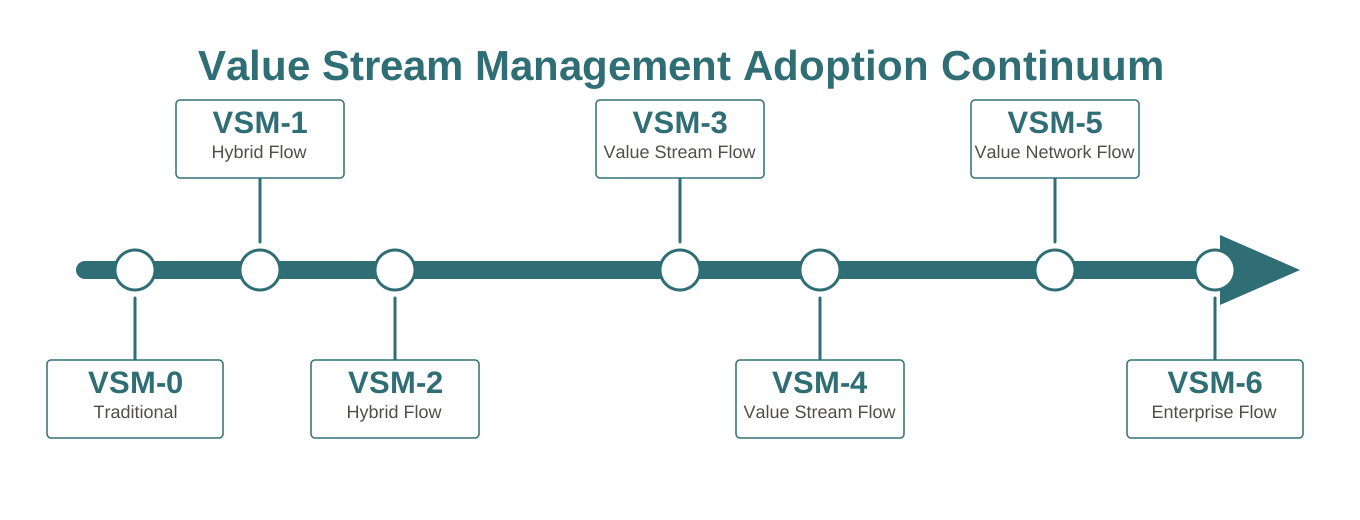
| Waypoint | What operates | Side and authority |
|---|---|---|
| VSM-0: Traditional | Project-based delivery, annual funding cycles, batch governance. Work arrives in large packages with fixed scope, budget, and timeline. | The common starting point |
| VSM-1: Hybrid Flow (Single Product) | Approved projects get decomposed into smaller increments. Delivery shifts from big-bang to sequential completion. Tactical side only. | Tactical; a delivery leader can act within one product |
| VSM-2: Hybrid Flow (Cross-Project) | Multiple project teams within a value stream coordinate dependencies and synchronize delivery. Still tactical side only. | Tactical; delivery authority across the value stream’s teams |
| VSM-3: Value Stream Flow (Single-Product Increments) | Funding shifts from projects to increments. Planning happens quarterly. The strategic side opens up. Requires executive sponsorship. | Strategic; executive sponsorship over delivery and investment |
| VSM-4: Value Stream Flow (Cross-Product Increments) | Increments span products within a value stream. Cross-boundary governance enables unified delivery and experimentation across product lines. | Strategic; governance that crosses product boundaries |
| VSM-5: Value Network Flow | Cross-value-stream optimization. Increments span business units. Enterprise-wide capabilities get funded and delivered as coordinated work. | Strategic; enterprise executive authority |
| VSM-6: Enterprise Flow | Full end-to-end flow. Funding flows to highest value regardless of organizational boundary. The North Star. | Strategic; a North Star that gives direction, not an expectation |
The tactical and strategic sides
End-to-End Flow divides the delivery system into two sides. The strategic side is where ideas are aligned with strategy, valued, and funded. The tactical side is where approved work is planned, built, and released. An intake queue joins them, and learning from released value feeds back to strategy.

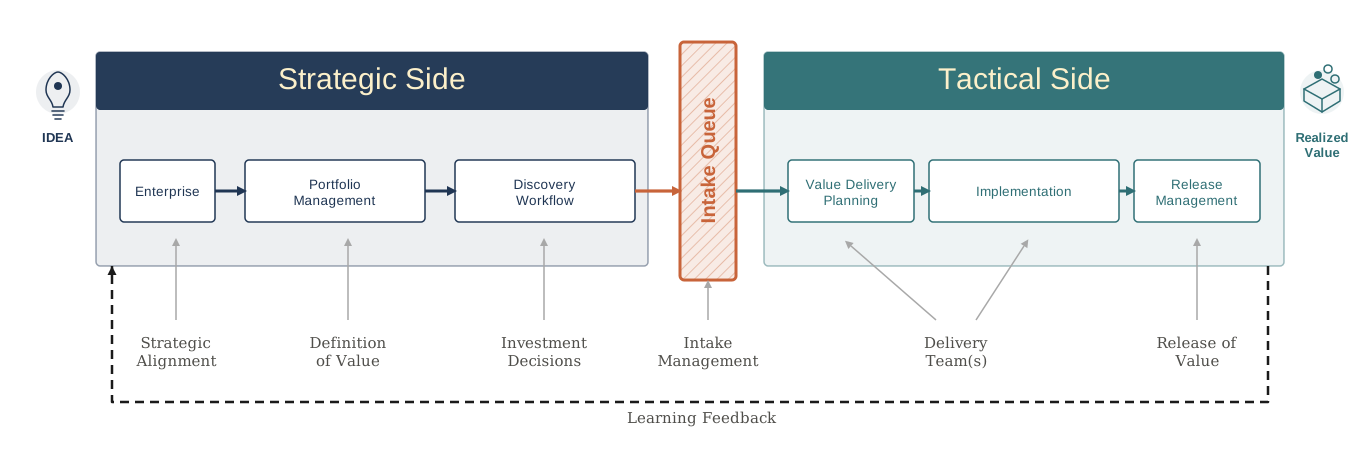
VSM-1 and VSM-2 live on the tactical side. They reshape the delivery of work that is already approved and funded, and they leave the investment model alone. A delivery leader whose mandate stops at execution can still decompose a project into increments, complete them one after another, and coordinate dependencies across the teams in a value stream. That is why the first two advances stay available when broader change is politically out of reach.
VSM-3 crosses onto the strategic side. That is the most consequential boundary on the continuum. From there upward, the continuum reshapes how funding flows and what gets approved: increment-based funding on a quarterly cadence at VSM-3, cross-product governance at VSM-4, cross-value-stream allocation at VSM-5, and enterprise-wide flow at VSM-6.
Authority grows with each of those steps. VSM-3 requires sponsorship from someone with authority over both delivery and investment decisions. VSM-5 and VSM-6 require authority at the level of CEOs, COOs, or enterprise transformation offices with genuine executive backing. The continuum works with whatever authority you have: a delivery leader who cannot influence funding decisions can still move to VSM-2 and gather the evidence needed to make the case for going further.
Locate by behavior, then target the constraint
Where you are
No large organization sits at one waypoint everywhere. A flagship value stream can cross into Value Stream Flow while the systems behind it still run on Traditional funding. So locate one value stream at a time, and read its position from operating behavior, not aspiration. Use these four questions to gather evidence through VSM-4, then compare the combined answers with the waypoint definitions. A single positive answer does not establish all the preceding capabilities. Beyond VSM-4, compare behavior directly with the definitions above.
- Splitting. Does approved work get decomposed into increments that complete one after another, or built in parallel and released as a single batch? Splitting is evidence of the VSM-1 capability.
- Coordination. Do the project teams inside a value stream plan their dependencies together, or does each plan alone? Coordinated delivery planning is evidence of the VSM-2 capability.
- Funding. Are investment decisions made quarterly at increment granularity, or annually at project scope? Quarterly increment funding is evidence of the VSM-3 capability.
- Boundaries. Can a single increment span products inside a value stream? If it can, and governance can fund it, that is evidence of the VSM-4 capability.
What is in the way
Rough positioning is enough, because the second move matters more: where are you constrained? What prevents you from delivering faster, learning faster, responding faster? The constraint reveals the waypoint to target, and it is not always the next one. Oversized approved projects point at VSM-1. Dependency collisions across projects point at VSM-2. An annual funding cadence that cannot respond to market shifts points at VSM-3, even if you sit at VSM-1 today. Product boundaries that fragment coherent capabilities point at VSM-4.
What you can attempt
Then match the target to your authority. Do not target VSM-4 if you cannot influence funding decisions. Do not stay at VSM-1 if the real constraint is coordination across projects. If the target is beyond your authority, use the tactical waypoints to build evidence that will win you sponsorship.
Example: delivery capability waiting on funding authority
Consider an illustrative value stream. Its teams already split approved projects into increments and coordinate dependencies across teams, so behavior places it at VSM-2. Its binding constraint is not delivery: when the market shifted last cycle, the organization could see that priorities should change but could not act until the next annual funding round. That constraint points at VSM-3. The delivery leader who ran the diagnosis has no influence over portfolio funding, so the deliberate choice is to hold at VSM-2, document the cost of the funding cadence, and use that evidence to win the executive sponsorship VSM-3 requires. That is all four moves in a single pass.
Waypoints, not gates: advancing is a choice
There is no certification at any waypoint. Position describes operating capabilities. The constraint diagnosis identifies what currently limits delivery, learning, or response.
Advancing is optional. Each transition has prerequisites and costs. If your current waypoint’s limitations are not what is actually holding you back, staying put can be a reasonable and deliberate choice.
VSM-6 is direction, not expectation. Useful improvements are available between VSM-1 and VSM-4; select them against the constraint and the investment they require. The North Star clarifies what the earlier waypoints build toward.
The continuum examines enterprise capabilities one value stream at a time. A team inside a VSM-0 enterprise can still see, finish, and improve its own work. That diagnosis belongs to The Constraint Horizon, which does the same job for a single team and is deliberately built differently.
Applied Test: locate one value stream
Choose one value stream you know well. Apply the four diagnostic moves, then record the decision:
- Where you are. Use the four locating questions to gather evidence, then compare the combined answers with the waypoint definitions. Record the waypoint whose capabilities are supported by operating behavior, including the preceding capabilities it depends on.
- What is in the way. Name the single condition that most limits how fast this value stream delivers, learns, or responds.
- Name the waypoint that addresses it. Which waypoint’s capabilities act on that constraint directly? It is not always the next one: an annual funding cadence points at VSM-3 even from VSM-1, and each transition along the way still has its own prerequisites.
- Name the authority required. Can you act on it, or does the transition require sponsorship you do not have?
- Decide deliberately. Advance, build the evidence that earns the sponsorship, or stay put on purpose.
The test is complete when the target waypoint, the constraint it addresses, and the authority it requires are all named.
Sources and lineage
The VSM Adoption Continuum is an Applied End-to-End Flow concept developed by Curtis Hibbs and Joshua Barnes. Its primary treatment, including transition prerequisites for each waypoint and the accelerating effect of AI on the journey, appears in Chapter 7 of Applied End-to-End Flow: Enterprise.
Curtis Hibbs and Joshua Barnes are co-creators of Effective Enterprise AI and Applied End-to-End Flow, and co-authors of Applied End-to-End Flow: Enterprise. Their work combines enterprise diagnosis, value-delivery mechanics, and practical intervention patterns across strategy, portfolios, value streams, and teams.